

Belize Hosts Regional Climate Dialogue: Focus on Climate Resilience and Future Preparations
- Government & PoliticsLands, Natural Resources & EnvironmentLove NewsNews Flash & Headlines
- August 30, 2024
- No Comment
- 2191
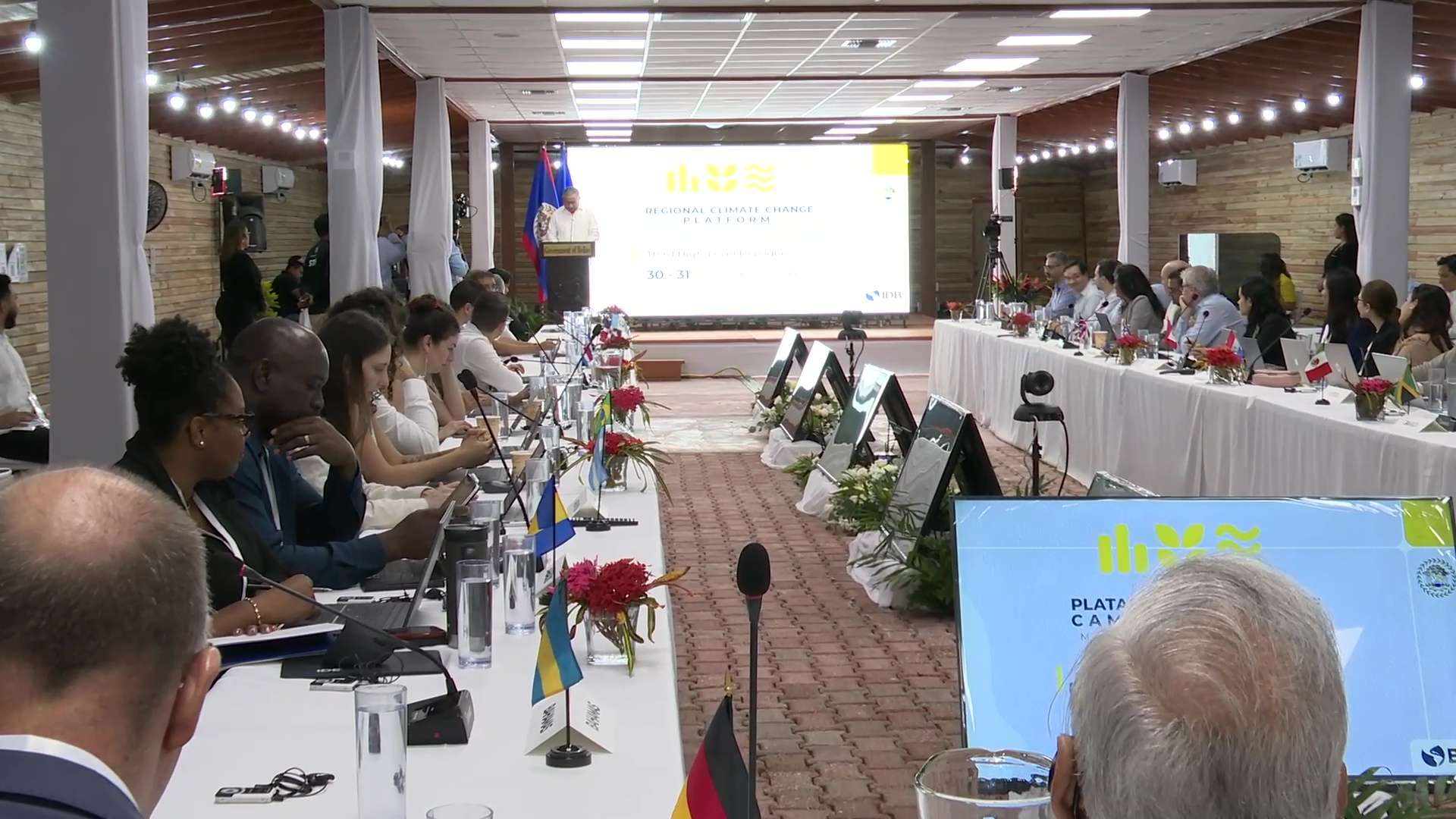
Belize is hosting the Third High-Level Dialogue of the Regional Climate Change Platform of Economy and Finance Ministries of Latin America and the Caribbean taking place in San Pedro. The 2-day event began today with Belize’s delegation led by Prime Minister John Briceno. The dialogue brings together ministers and senior representatives from eighteen countries, regional agencies, IDB executives, and bilateral partners. In his address, Prime Minister Briceno spoke about Belize’s push for greater climate resiliency and the importance of preparing for the future.

Jon Briceño, Prime Minister of Belize: “Over the past two years, our country has not only embraced the objectives of this platform, we have mobilized our human and financial resources to make them a reality. We commend the Secretariat and the IDB Group for their invaluable technical and financial support. Their work in knowledge generation, resource mobilization, peer exchanges, and intersectoral coordination has led to several significant milestones such as the first of its kind comprehensive technical training from the Ministry of Finance in Latin America and the Caribbean on fiscal policy for climate action and engagement for member countries. The collective development of a shared vision of sustainable finance among ministries of finance in the region, the establishment of the platform as a globally recognized knowledge hub, and the creation of an accountability mechanism by ministries of finance in Latin America and the Caribbean to monitor policy implementation. I believe it is safe to say that the work done on the regional level has certainly had a positive effect on the national efforts across our respective countries. Take Belize for example we too have made significant contributions to international climate change through innovative measures. We successfully implemented a homegrown investment grade blue bond transaction that mobilized private capital to restructure and reduce our national debt while financing marine conservation.”
A key outcome of the meeting will be the formal adoption of a unified regional vision on sustainable finance. Jordan Schwartz Executive Vice President of the IDB underscored the need for a regional approach to tackle the increasing effects of climate change.

Jordan Schwartz, Executive Vice President of the IDB: “The frameworks that we have used traditionally to deploy resources and confront weather and climate events have traditionally attempted to separate the stochastic events from the predictable events. It typically places the severity of a catastrophe against a frequency of a more regular weather event. This separation is something that the insurance industry relies on to price its premium and yet climate events that were once rare, as Frank was saying, are now occurring with greater frequency. And those that were regular and manageable are becoming increasingly intense. So this makes the severity versus frequency paradigm less stable, both axes are dynamic and moving. The data on this is pretty clear. Hurricanes are now three times more frequent than 100 years ago. In the Atlantic, the proportion of major hurricanes, category three or above, as I understand has doubled since 1980 in the Atlantic. And as probability works when frequencies intensities increase overlapping crises become more common which creates yet another form of financial and economic stress. So over the last few years in our region, destructive hurricanes have landed on us during COVID, during a devastating global pandemic, and droughts, floods, and wildfires have erupted simultaneously in the same regions. This means we must look for ways to confront hurricanes that no longer respect our seasons, like Beryl, and large-scale events that overlap with the lingering effects of sea level rise, coral bleaching, the spread of sargassum, storm surge, droughts and wildfires, not to mention pandemics, mosquito-borne diseases, heat-related deaths, and other health scares. It’s a terrible list.”
At the end of the high level meeting the pro-tempore presidency will be transferred from Chile to Colombia.