

Belize Installs New Weather Stations to Boost Climate Resilience and Prediction
- Weather & Natural Disasters
- August 19, 2024
- No Comment
- 2633
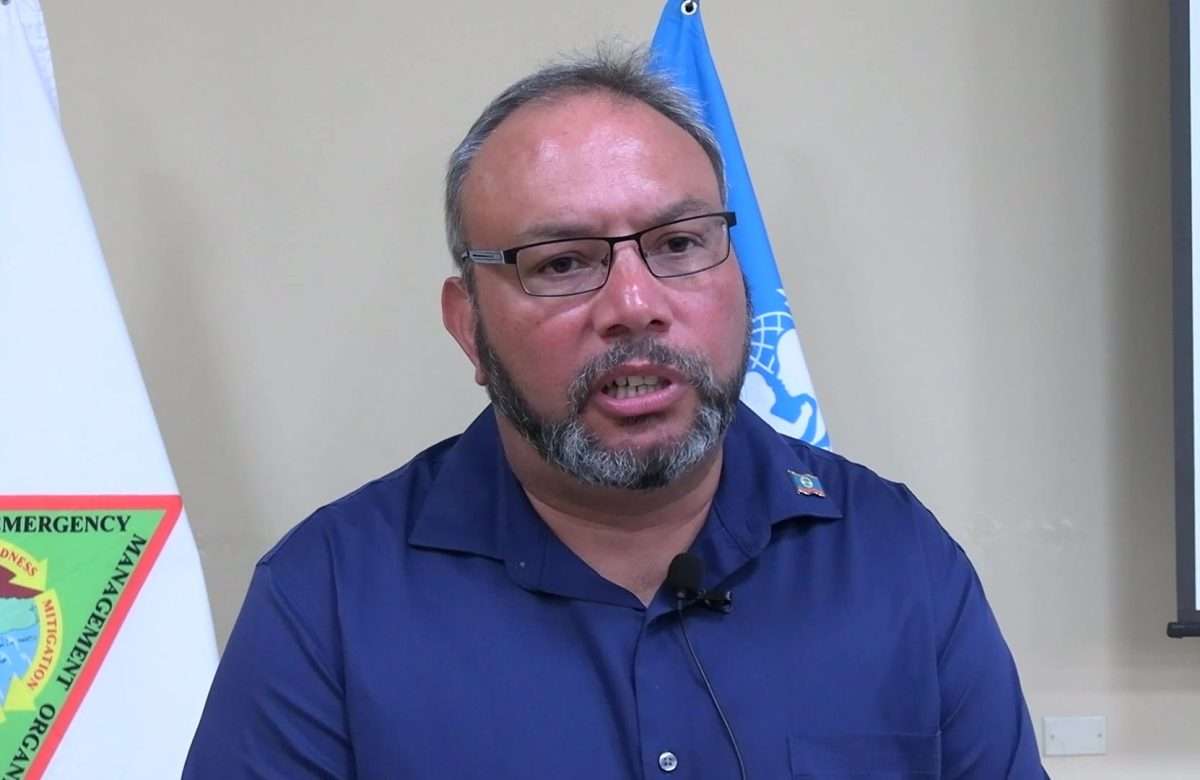
The National Meteorological Service of Belize continues to enhance its capabilities by installing new weather stations country-wide. This morning, the Ministry of Disaster Risk Management unveiled a state-of-the-art facility at the municipal airstrip in Caye Caulker Village. The “Energy Resilience for Climate Adaptation Project” (ERCAP) seeks to enhance the department’s ability to collect climate data and improve its weather predictions. The department will be installing 23 new automatic weather stations in strategic locations and previously unmonitored sites such as Caye Caulker. Minister of Disaster Risk Management Andre Perez spoke about the installation and how the project will benefit the country.

Andre Perez, Minister of Blue Economy and Disaster Risk Management: “This total investment in the National Meteorological Service under this project amounted to over 1.3 million US dollars. The procurement and installation of the 35 automatic weather, rainfall and hydro-meteorological stations amounted to just over a million US dollars, or an average of around 30,000 US dollars per station. As the minister responsible for national met service, I want to express my sincere gratitude to the GEF, the World Bank and all other agencies that made this project a reality. These weather stations will be extremely beneficial to the National Met Service of Belize in complementing its network of weather stations country-wide. The automatic weather stations, rainfall stations and hydro-met stations that were procured and installed through this project will assist the department and other partner agencies and departments in ensuring that timely and effective alerts of potentially hazardous weather and climate conditions are provided to the public. As one of the countries that is ranked the most vulnerable to the impacts of climate change globally, and know and Caye Caulker as the chairlady mentioned at the forefront, indeed we are at the forefront of climate change, rising water levels, beach erosion, etc. being exposed to the weather, most importantly with hurricanes that we are actually in hurricane season. It is imperative that Belize makes optimum use of these opportunities aimed at enhancing resilience to extreme weather and climate events that are intricately linked to climate change. Of course you are all aware that energy sector like many of other sectors in our economy experience a high-level risk due to uncertainties in weather and climate as Mr. Thimbriell has mentioned as it relates to energy.”
Director of the Ministry of Public Utilities Energy Logistics and E-Governance’s Energy Unit, Ryan Cobb, says the project also aims to enhance the resilience of Belize’s energy system against adverse weather conditions and the long-term impacts of climate change.
Ryan Cobb, Director Energy Unit, Ministry of Public Utilities: “It might not be the first thing that comes to mind when considering factors that can affect the energy market but weather can greatly influence the energy market, from electricity generation to cooling demands. The relationships between meteorological conditions and energy usage is intricate and certainly impactful. Understanding this relationship is essential for stakeholders across the energy sector as weather conditions can drive significant fluctuations in energy demand, affecting both consumers and suppliers. Weather and climate information are essential for decision-making processes regarding energy applications spanning from individual buildings to renewable energy systems and utility grids. Weather significantly influences energy generation, transmission, consumption behaviors in these systems. Climate-induced weather variations and extreme weather events also affect the resilience of both energy supply and demands. And resilience is a recurring theme. It’s not just enough to generate the amount of electricity that we want but we need to have it to be stable, dependable, and resilient to external shocks. Not just the usage, but from shocks of natural disasters. Extreme and severe conditions can lead to grid failure, energy generation shortages, increasing energy demands, and disaster-induced destructions highlight the essential of the need of accurate weather data. Hence, to effectively plan, design, size, construct, and manage buildings and energy systems, spatially representative weather data is essential to perform analysis, forecasting, and simulation. And that’s what this project has been able to bring.”
The project is funded through a grant from the Global Environment Facility, which was channeled via the World Bank