

Belizeans Express Pessimism as SIB Reports Declining Consumer Confidence
- Economy, Banking & Finance
- September 25, 2024
- No Comment
- 1854
According to the most recent data from the Statistical Institute of Belize, consumers are saying things are not looking so good for their household and the economy. Today, at the SIB’s third press conference for this year, the organization began by looking into the country’s consumer confidence index (CCI). The CCI looks at household consumptions and savings, based on answers regarding their expected financial situation and general sentiments about the economy. The SIB developed a questionnaire with micro and macro questions looking at the spending habits and financial status of households between May and August of this year. According to the data collected, Belizeans don’t feel too optimistic about their financial situation. Acting manager of the SIB’s statistical economic unit, Jacqueline Sabal, provided more details.
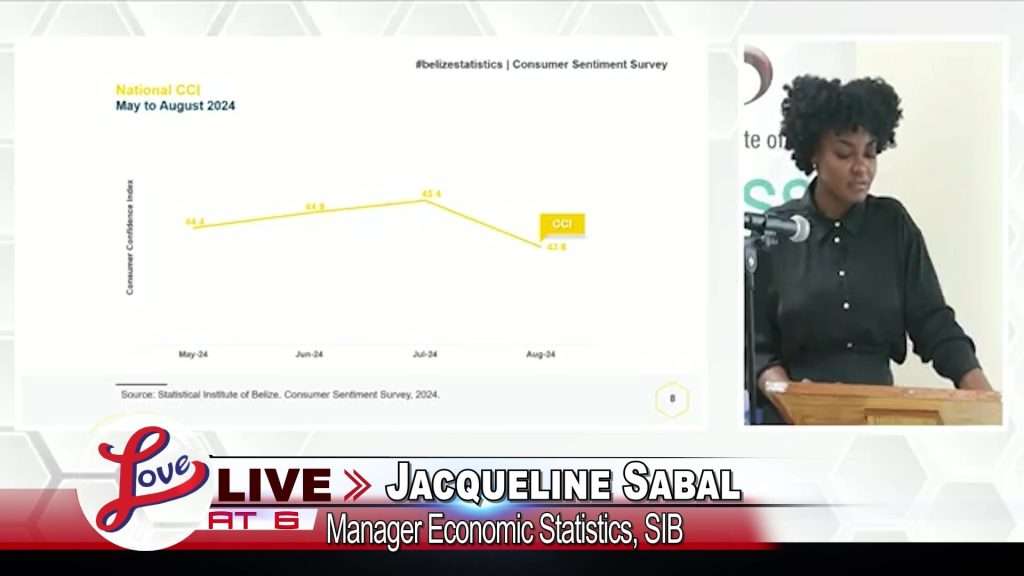
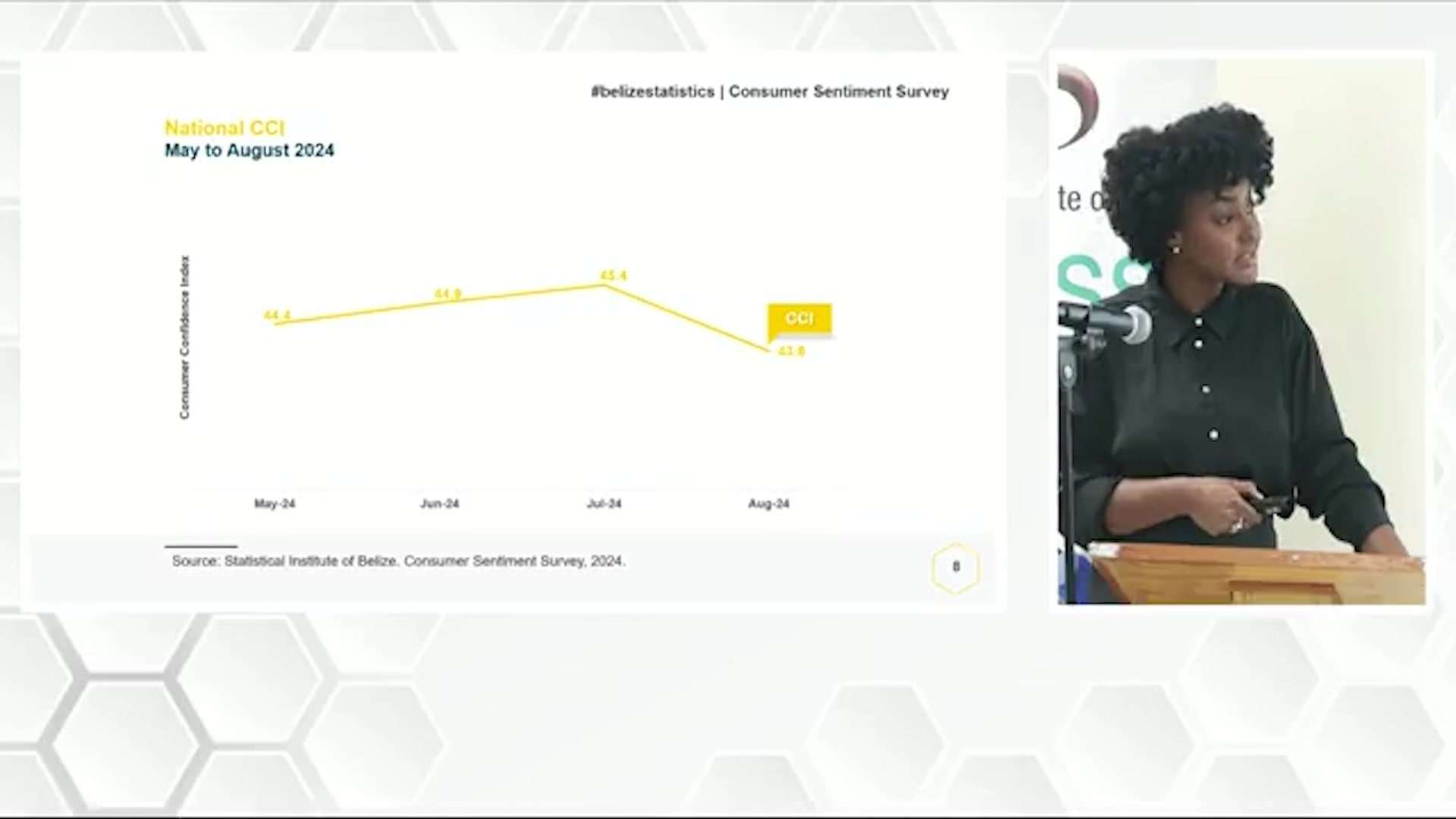
Jaqueline Sabal, Manager Economic Statistics, SIB: “For the period of May to August 2024, there were several consecutive months of growth in the consumer confidence index primarily from May to July. However, the overall decline to 43.6, you notice that drop to 43.6 in August, presents a break in this upward trend that we previously observed. Now, what caused this increase in pessimism among consumers. If we break down the CCI by component note that the drop in durable goods from 39.8 to 37.4 represents a 6.2% decrease. So that was the main contributor to the overall decline in August. Again over just the one month period from July to August. This was followed closely by a 5.4% drop in the expectation index.”
According to the SIB, the CCI for August dramatically fell by 3.8 percent signaling that consumers feel more pessimistic compared to previous months. Sabal delved into the data collected for that month and the CCI for specific groups of the population.
Jaqueline Sabal, Manager Economic Statistics, SIB: “Again for the month of August consumers felt more pessimistic about making major purchases of durable goods. Consumer confidence for durable goods decreased from 39.8 to 37.4 and they also felt less optimistic about future expectations. So their household future financial situation and future general economic conditions, consumers felt less optimistic about that index. Sentiment among urban consumers decreased by 1.6% from 41.7 to 41.1, while sentiment among rural consumers decreased more sharply by 5.4% from 48.3 to 45.7. For urban consumers the CCI was consistent with the national index meaning that the reason for the decline was also based on decreases in expectations and durable goods. So urban consumers felt less optimistic about their future conditions and they also felt more pessimistic about spending on those major purchases. However, for consumers in rural areas, their CCI dropped across all three components even regarding the present. So when it comes to present conditions compared to 12 months prior in rural areas those consumers also experienced increased pessimism for that index. If we look at the CCI by sex note that the overall upward movement of the male consumer confidence index up until August when it recorded a decrease at 47.5. So for males, their consumer confidence index was on an upward trend until it dropped in August. The opposite applies for females, they maintain a steady downward trend when it comes to overall confidence. For the month of August when compared to July, the decrease in male consumer confidence was attributed to the expectations index which decreased from 61.2 to 55.3. For females, their CCI dropped from 41.4 to 40.1, and this was mainly due to females feeling more pessimistic about making major purchases and less optimistic about their future households and general economic conditions. However, for females, they did express improved sentiment regarding present conditions compared to the males.”
Notably, the highest decreased in CCI figures among ethnic groups was recorded among the Garifuna and Maya.