



$25M Climate Resilience Project Launched to Support Northern Belize Sugarcane Farmers
- Agriculture & FarmingBusiness, Companies & OrganizationsLove NewsNews Flash & Headlines
- February 10, 2025
- No Comment
- 3385
More than 5,000 sugarcane farmers in northern Belize are set to benefit from a new project aimed at increasing the sugar industry’s resilience to climate change. The “Building the Adaptive Capacity of Sugarcane Farmers in Northern Belize (BAC-SuF)” project was officially launched on Friday. The Green Climate Fund is providing twenty-five million US dollars for the project with an additional thirteen-point eight million US coming from counterpart sources. The Caribbean Community Climate Change Centre (CCCCC) will be the implementing agency along with partners such as the Sugar Industry Research and Development Institute (SIRDI), Belize Sugar Industries (ASR/BSI), and the cane farmers themselves. Marcos Osorio, Chairman of the Sugar Industry Control Board explained that the project has several components, which will positively impact the lives of cane farmers. One of these components will focus on increasing the yield of cane fields through climate-smart water management practices.
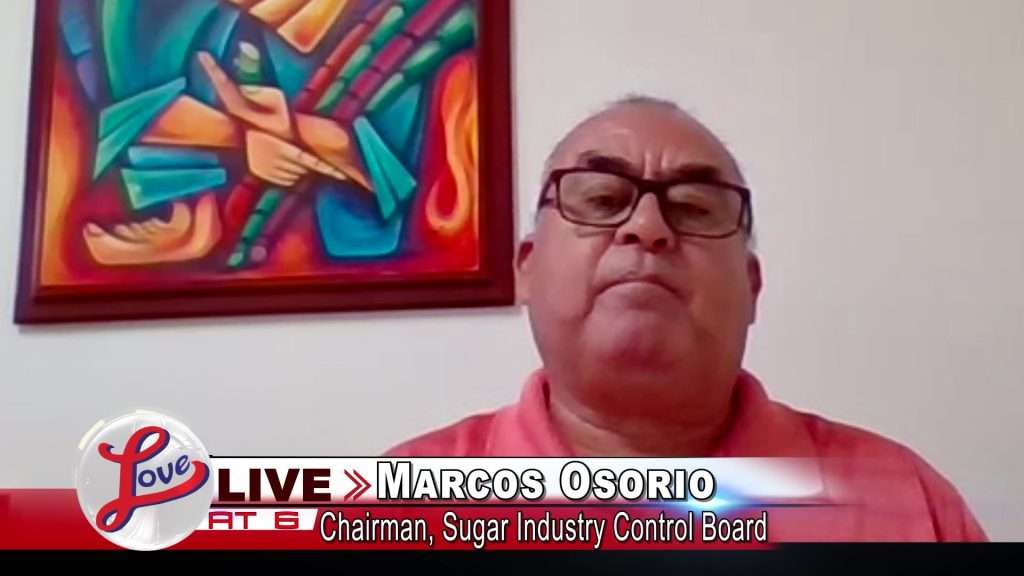
Marcos Osorio, Chairman, Sugar Industry Control Board: “The impacts of this project will bring about, is foreseen to bring about improvements in the livelihoods and sustainability of our sugar cane farmers and their families. The project will see investments in providing support to production through sustainable water management. What this means is that the project will develop a pilot project, we’ll set up a pilot project of about 2000 acres which will take into account all that is required in terms of water management, which has to do with building of drains, setting up irrigation, to prove to the industry and farmers that through water management and irrigation, along with the crop diversity, which has to do with component one will bring about an increase in sugarcane production per acre, which we term as improving or increasing productivity along the supply chain. So, and this will be achieved through climate smart practices, which involves, as I had said, drainage and irrigation along with the introduction of the new sugarcane varieties to the production system.”
Olivia Carballo-Avilez, Manager of Cane Farmer Relations at ASR/BSI, said that adverse weather due to climate change has impacted the farmers’ ability to produce quality sugar. This impacts the mill which then has to extract this low-quality sugar. She noted that crop diversification is a key component in improving climate resilience.
Olivia Carballo Avilez, Cane Farmer Relations Manager, ASR/BSI: “With the climate impacts of drought, floods, erratic weather conditions throughout the year, we are seeing that farmers are really being impacted in terms of their yields and their cane quality. This is very bad news for the miller, which is of course us at BSI because this impacts how efficient we can be in terms of grinding that cane, producing. sugar. Sugar is produced in the in the cane fields not at the factory. We extract the sugar so if the farmers are unable to produce that in their fields we’re unable to extract that. And key to this project is the diversity of varieties. Currently the sugar industry here in the north relies 70% on one variety. That’s like putting all your eggs in one basket the B79 variety. And what we are doing is that we are introducing 11 new varieties to this diversity. And this is because BSI from 1970s has been working hard on a varietal research program, which is now bearing fruit. This program has identified again, the 11 varieties and four of these varieties are showing resilience to drought, floods, there is no silver bullet to a variety. So you have to select from a basket, from a diverse basket so that you’re able to implement the varieties in the different field conditions that you are seeing.”
The project is expected to indirectly improve the lives of more than 87,000 people.