

Ancient Royal Tomb Found at Caracol in Major Maya Discovery
- Arts, Culture, History & HereosGovernment & PoliticsLove NewsNews Flash & Headlines
- July 11, 2025
- No Comment
- 3413
The National Institute of Culture and History (NICH) says that the landmark discovery of a tomb at the Caracol archaeological site sheds greater light on Maya civilization both in the Belizean and regional context. The tomb of Te K’ab Chaak, the first known ruler and founder of the royal dynasty of Caracol, was discovered back in February. The discovery was made by the Caracol Archaeological Project, led by Drs. Arlen and Diane Chase of the University of Houston, who have both been working at Caracol for decades. Today they gave further details on the historic find.
Dr. Arlen Chase, Archaeologist, University of Houston:“We’ve been digging there at Caracol since 1985 when the Institute of Archaeology first proposed that we work there for minimally 10 years. We’ve now been there for 40 years. We’ve spent a lot of time doing mapping, digging in the settlement, digging in the epicenter and as a result of that we tend to come back, go back and forth between settlement and epicenter. This year we did a little of both and one of the things that we did was reopen a 1993 excavation to double check something in our archaeological drawings by going underneath a late classic tomb that we did not do in 1993. And when we did that we discovered a tomb that dated to around 350 AD.”
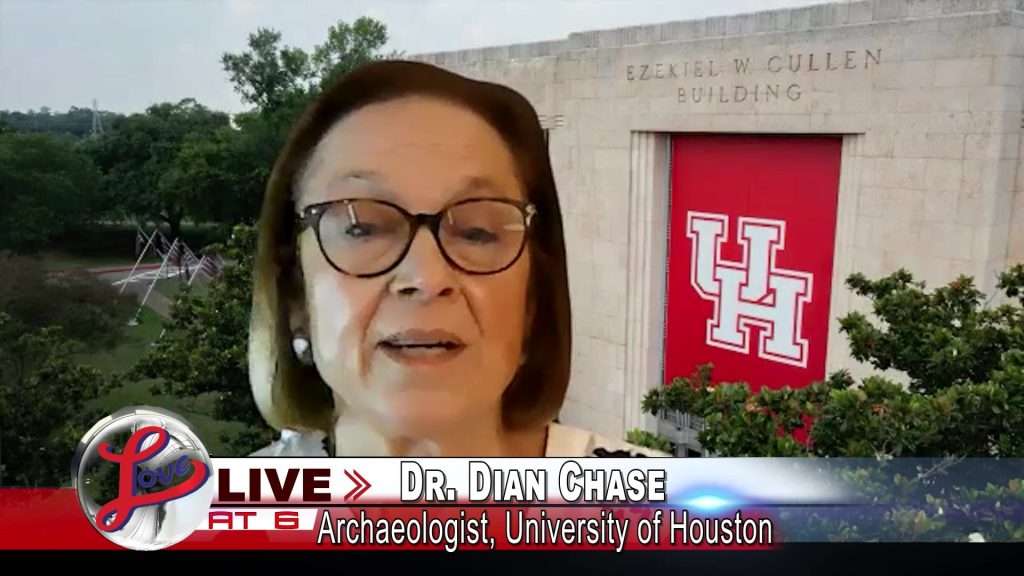
Dr. Dian Chase, Archaeologist, University of Houston: “This particular tomb is important for a variety of reasons. On one hand it is the first tomb that we found that we can identify with a ruler at Caracol. That is huge. In addition to that, the tomb and its context and the relationships with the other excavations that we’ve done over the years showcases that Maya dynastic rulership was a local development in Belize at Caracol, that it’s not something that was introduced from the outside. There are many suggestions about how important the site of Teotihuacan, which is outside of Mexico City, was in terms of the Maya. This showcases, again, that development of dynasty was internal and it was not caused by an invasion of or determination by that other city. In addition to that the work in the Northeast Acropolis and this particular chamber in addition to it, shows that the Maya at that time, and this is relatively early, are in contact with other peoples in Mesoamerica, as far away as Mexico City but also Guatemala City or northern Yucatan. So the Maya were travelers, they were traders, they were well aware of the other people that were living at the same point in time.”
Dr. Melissa Badillo, Director of the Institute of Archeology, assured the public that all of the artifacts from the tomb are in Belize and will be protected.

Melissa Badillo, Director of the Institute of Archaeology: “Well, certainly it brings awareness and the increase in visitations, increase in interest in archaeological research in Belize. We welcome everybody to come and visit Caracol. We can look forward to updates as it pertains to this tomb in the near future. We will be posting some of the information as we get it. We will be working internally on digitally documenting the contents of the tomb so we will be sharing those as they become available and hopefully, you know, bring some of this into Caracol at the reserve where people can then interact with these pieces and the tomb itself. But certainly, you know, it brings a big awareness and brings Belize archaeology to the forefront in the region and internationally and we’re certainly happy about that. Entire process for research in Belize is very well documented. There’s documents involved, paperwork, we have monitoring and I can assure you that the contents of the tool is here in country and as I mentioned earlier, we will be showcasing some of these possibly next week if we have them ready. And we will be providing further updates as we move along and as we work with the Chases in getting some of the additional research completed and seeing how much more information can be ascertained from the discovery.”
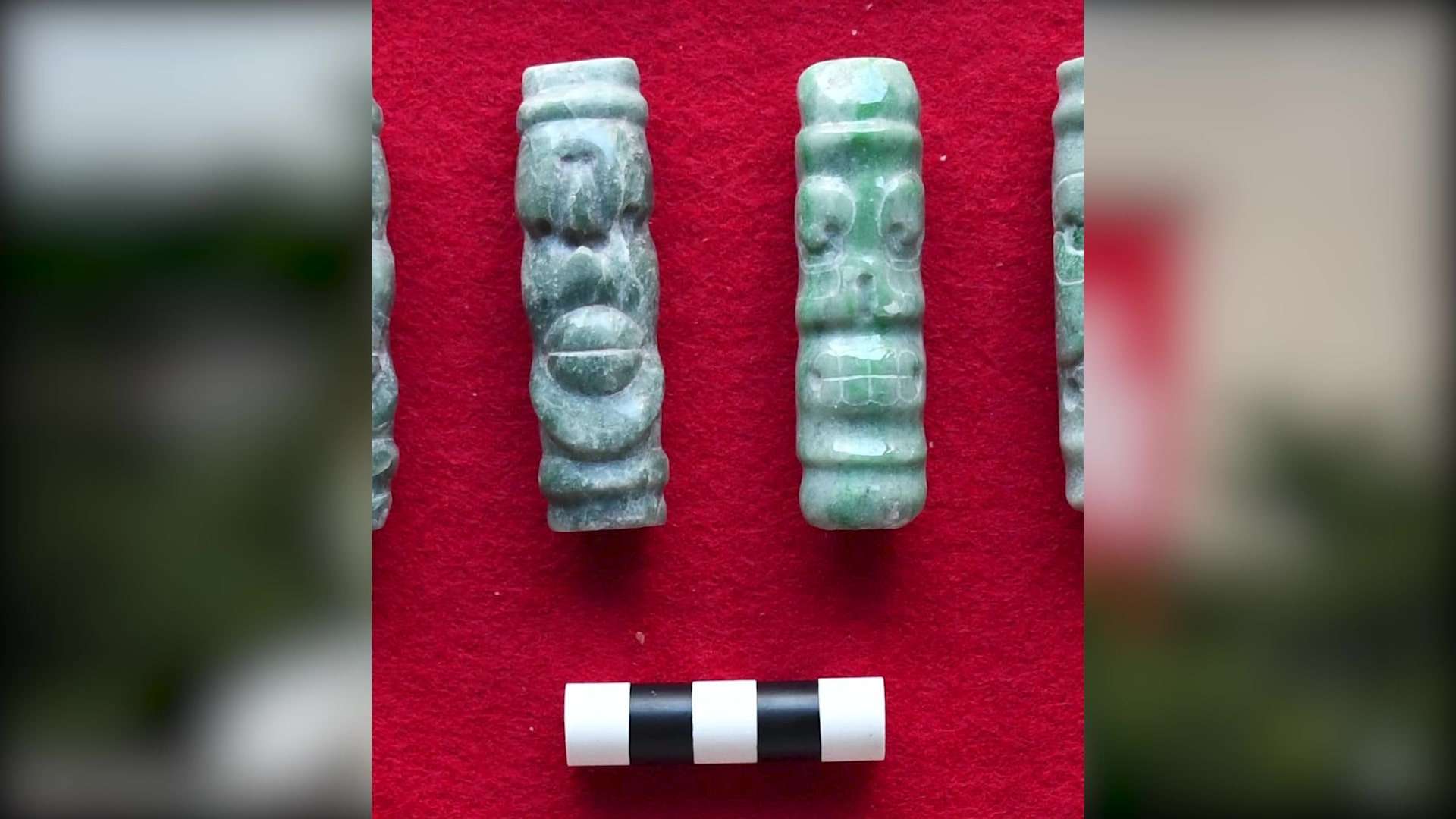
The tomb contained a collection of jadeite ornaments, intricately carved bone tubes, pottery vessels, a mosaic jadeite mask, and a rare spondylus shell. Dr. Arlen Chase noted that despite digging over 170 tombs and over 80 burial sites, this was the first time that a jadeite mask was found at Caracol.