

Prime Minister shares a positive outlook for sugar industry
- Agriculture & FarmingGovernment & PoliticsLove NewsNews Flash & Headlines
- January 19, 2026
- No Comment
- 1911
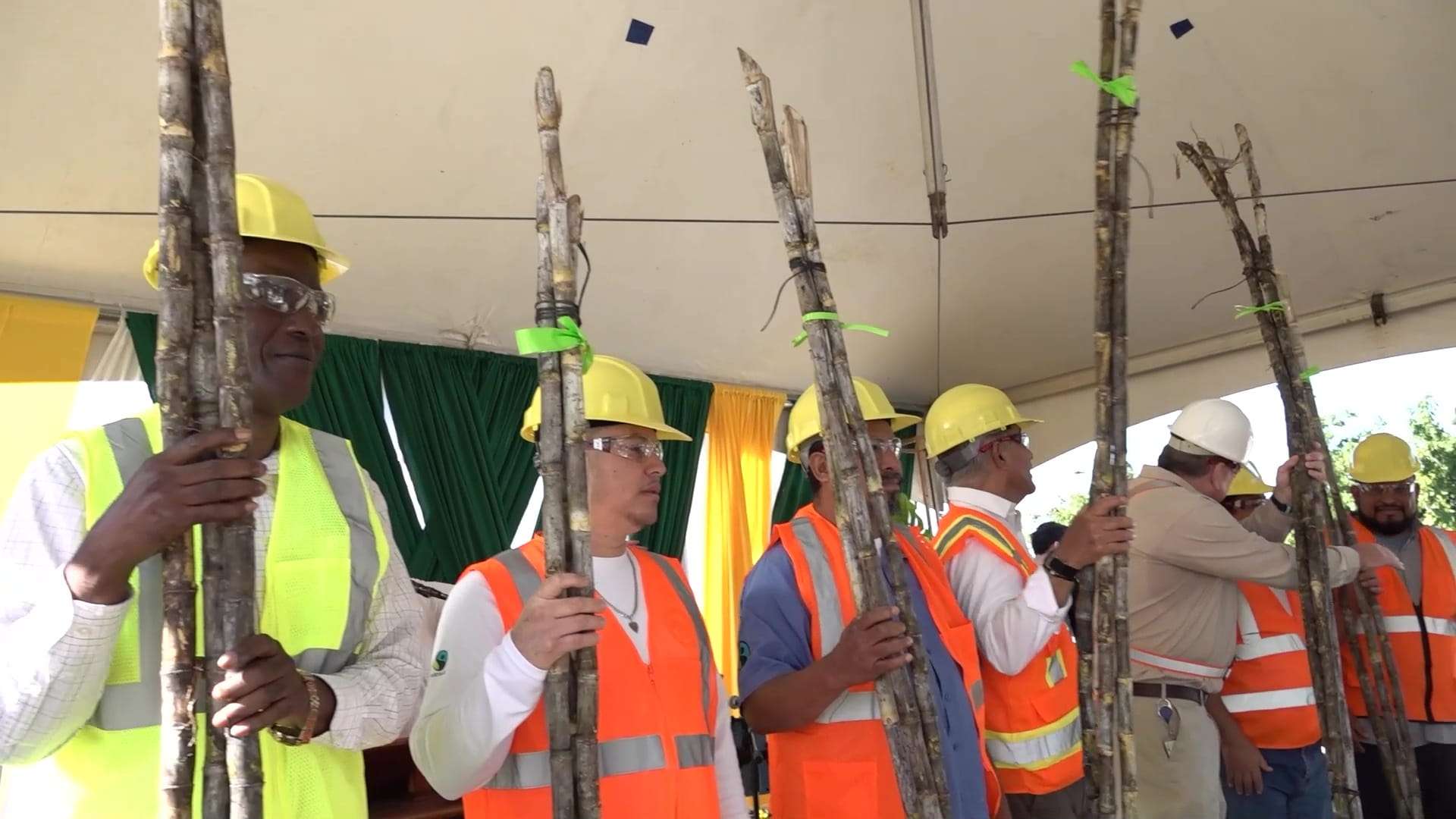
Prime Minister John Briceño made a rare appearance today at Tower Hill in the Orange Walk District for the official opening of the 2026 sugarcane harvest and milling season, possibly signaling a renewed confidence in the future of Belize’s sugar industry. The Government of Belize, together with the Belize Sugarcane Farmers Associations and the mill, formally launched the new crop year during an official ceremony, marking the start of a season shaped by improved field conditions, stronger coordination, and more positive production prospects across Northern Belize. The 2026 season begins with healthier cane fields, improved harvest quality, and increased operational readiness. Extensive preparation by farmers, associations, millers, and technical partners is expected to support a more efficient and productive harvest and milling process. Prime Minister Briceño emphasized the resilience of cane farmers and explained why the sugar industry was placed under the direct purview of the Office of the Prime Minister. He also provided an update on the Commission of Inquiry.

John Briceño, Prime Minister of Belize: “To me it’s been quite a privilege and an honor to be here. And it allowed me to be able to reminisce a little bit. As I said, I spent countless hours here on the tail what they call to be able to deliver our cane. And many Saturday nights I wanted to go out but I had to stay here till 11 when the factory is closing down and then be up at 5 o’clock to be here before 6 o’clock to be able to try to deliver on Sunday morning. So it did bring some good memories but at the same time it helps to be able to reconnect and to fully understand and to give the message to the Belizean people the importance of this industry. Talking is cheap, it’s about the actions and what you do. The first thing I did was to put the ministry of sugar under my responsibility to be able to demonstrate how serious we are about this industry. And then had Dr. Osmond Martinez as the minister of state, he to be able to deal on a daily basis on some of the issues. To be able then immediately I took on the Commission of Inquiry report and said okay let’s work with the farmers and the association and BSI to be able to come up with a plan. They come up with a plan which calls for a $120 million dollars investment. It’s an investment that’s going to be over time. We when we were informed about the serious challenge of fusarium we immediately found $3 million dollars to be able to invest. And by doing that, instead of the sugar industry continuing , the productively to go down it has increased. And we expect that we’re going to reach the 1 million ton mark on this sugar cane season. So we’ve been doing a number of things. Working with the 5Cs, $50 million to improve the resiliency of our cane farmers, teaching them how to adapt to the changes that we’re facing, climate change. It’s real. It’s here. So we are demonstrating not only by talk but by talk but by action how serious we are committed to the sugar industry.”
Belize Sugar Industries General Manager, Mac MacLaughlin, addressed the opening and provided an overview of the state of the industry. He noted that while the crop is starting somewhat late, operational changes to the delivery system are being implemented this year with the goal of filling quota targets and ending the crop earlier. MacLaughlin also pointed to future improvements within the industry, including mechanized harvesting, core sampler testing, and a revised commercial agreement focused on cane purity and improved quality, measures he says could enhance competitiveness and deliver greater rewards for farmers.
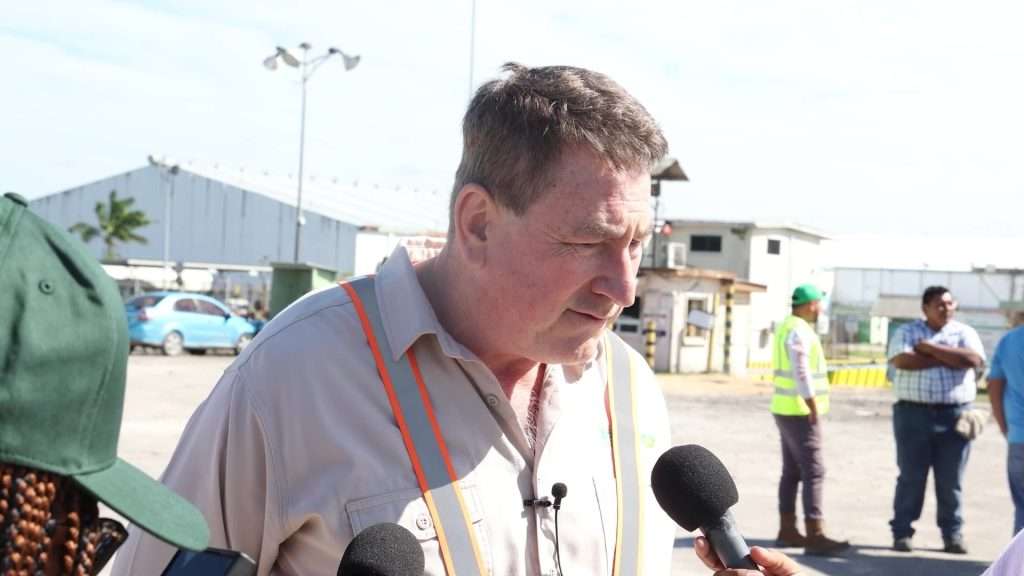
Mac McLachlan, VP, Country Manager, Belize: “We’re expecting more cane this year than we had last year. Last year was a low, we had 900,000 tonnes. This mill has milled 1.3 million tonnes in the past, and that’s where we want to get back to. But we’re reckoning we’ll be perhaps a shade over a million tonnes this year. So that is an improvement on last year, but not nearly where we need to get to. I think we had a few harsh lessons last year, particularly due to fusarium, but also if you track the record of productivity of our cane over the last four years you’ll see a gradual decline. Now that’s partly because we haven’t introduced in a big way new varieties into the cane farm. We’re still relying on predominantly two varieties which, and one of them in particular was badly affected by Fusarium. BSI has been working now for the last 10 years on new varieties, developing new varieties, and I’m delighted that soon by March we’ll be able to introduce into the industry 750,000 plantlets that have been developed from tissue culture in Florida which are all for new varieties that we’ll be propagating as clean seed to be pushing out into the cane farm generally across the northern Belizean cane farm. And that will improve the pulp of the cane, the amount of sugar in it, it will improve its durability and its resilience to climate change and it will also we hope become a lot more of a stable variety for the industry moving forward. We are starting a bit late and in a way that’s a good thing. Firstly as you know it rained a lot in December and it could have been a very bad start to the crop but also because we have a number of changes to the way the delivery system is going to work this year. The industry is working closely together, associations, sugar industry bodies such as the SCPC and CERDI and the SICB and of course the mill and our objective, clear objective this year is to really fill up this mill capacity which is on average about 7,000 tonnes of cane a day milling. In order for us to have a shorter crop that means that in the end we will get better quality sugar coming in, we’ll have a shorter kill to mill time from when the cane is prepared in the field and comes to the factory and we will finish the crop sooner and hopefully avoid the rainy season, the traditional rainy season that may take place towards the end of June, early July. So all of these things help produce more sugar, they reduce the cost to both the mill and the farmers of having a shorter crop. One of the major changes we’re seeing this year is a much greater movement towards mechanized harvesting. BSI and NECL, one of our contractors, have now, as well as BSI, came with contracted 80,000 tons of cane farmer cane for mechanized harvesting. A number of the associations have created their own mechanized harvesting groups. We’re all aware of the labour shortages in Belize and really the future is to go to larger scale fields and more mechanized harvesting in order to reduce the exorbitant cost of harvesting and delivering cane. So lots of positive changes, lots of reasons to be optimistic for this crop.”
Minister of State in the Ministry of Economic Development, Dr. Osmond Martinez, reflected on last year’s uncertainty when the industry faced the possibility of not having a 2026 crop season. He explained that a combination of government intervention, stakeholder collaboration, and targeted investment helped make this season a reality, including a $2.5 million public-fund injection to combat fusarium disease.
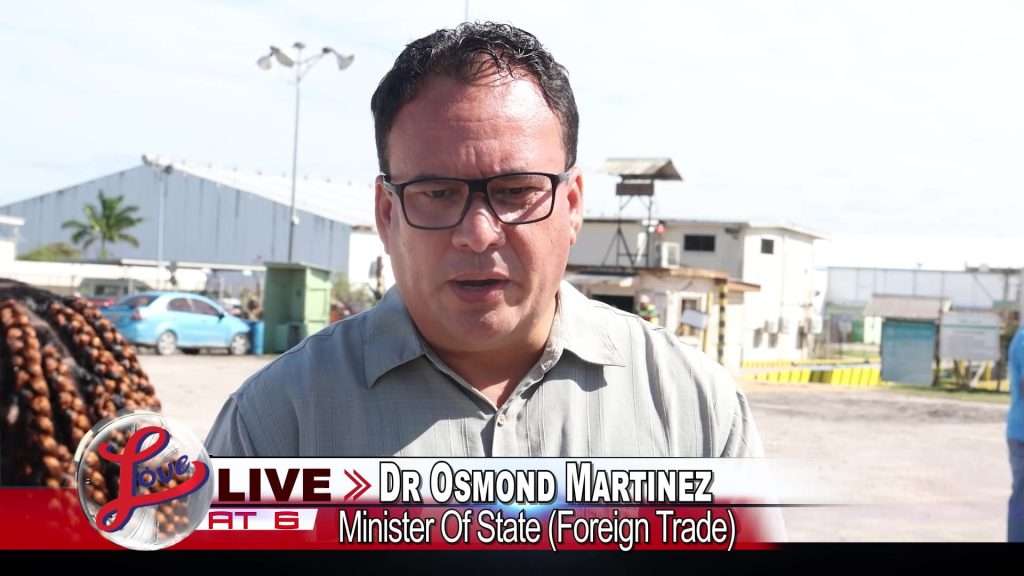
Dr. Osmond Martinez, Minister of State: “And I believe it was no secret to the general public to the point that in June when the budget the debate was presented, the prime minister declared the sugar industry as an industry that is in crisis. And so just three months ago, the uncertainty was still high, you know. But a combination of many components have helped the equation of success to be successful and to be where we are today. One of them was the interventions from government. Government did invest $500,000 through the Ministry of Agriculture to do a pilot test to see if it will work in terms of arresting Fusarium. It worked. And then PM presented to cabinet a further $2.5 million to continue to arrest Fusarium. It was approved but then the most effective way to arrest the pathogen was to do a ground application but then the rain started and we were fierce with a new challenge. And there was very little literature to see if we can adapt a new methodology such as aerial application. And we took the risk with God’s help and grace, the aerial application worked. In addition to that, a combination of good weather, good climate have also assisted in terms of reducing. We practically, I won’t say we have managed to arrest Fusarium at 100%, but at a satisfactory level, there is still a lot of work that needs to be done. But nonetheless with the combinations of government’s interventions, the associations, the farmers, the mill doing its part, the forecast for this year is that production will increase from anywhere between 10% to 20%p and the quality of the kin will be much better than last year’s one.”