

Belize Launches $753K Climate Data Project with IDB Support
- Government & PoliticsTechnologyWeather & Natural Disasters
- May 22, 2025
- No Comment
- 3190
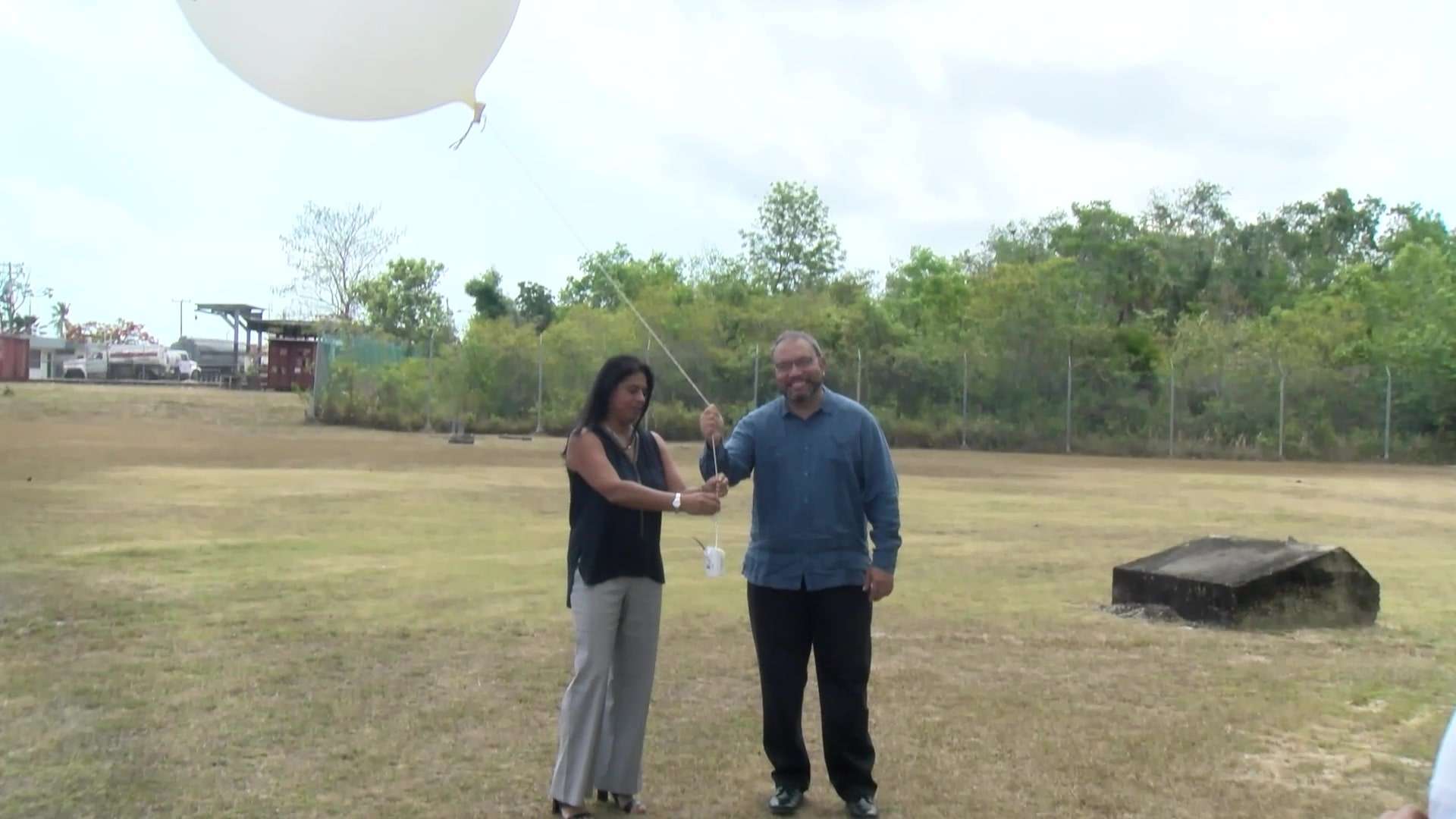
Belize is now the first country in Latin America and the Caribbean to benefit from an Inter-American Development Bank (IDB) project, aimed at improving the collection of weather data. Today, the National Meteorological Service of Belize and the IDB hosted the official launch of the Systematic Observations Financing Facility, (SOFF) project. SOFF is spearheaded by the World Meteorological Organization, the United Nations Development Programme, and the United Nations Environment Programme. Here in Belize, the project is being implemented through the Inter-American Development Bank, with crucial advisory support from the UK Met Office. Through this initiative, the National Met’ Service will receive grant funding totalling 753,000 US dollars to strengthen institutional capacity, human resources, and infrastructure. The core objective of SOFF is to bolster climate adaptation and resilience by increasing the availability and sharing of vital weather and climate data. This, in turn, will significantly enhance our early warning systems and climate services, particularly in small island developing states and least developed countries like Belize. At the official launch ceremony, Minister of Disaster Risk Management, Henry Charles Usher, said that the project will help authorities to deliver accurate, reliable data in a timely manner.

Henry Charles Usher, Minister of Disaster Risk Management: “The idea is to allow Belize to be a part of the global network of weather data sharing. We are actually the first in the region, in Latin America and the Caribbean to be able to lead the way with SOFF. There seems to be a gap in the way information is distributed or disseminated to the public. So it’s important to invest in that type of technology as well. Recently, the MET Department launched an app and that app is only available on Android for right now but it will be available on other platforms very soon. That is only one way we are looking at it. Of course the media plays an important role in the dissemination of the information. But I think what is also important is that the information that is being shared is information that the people feel that they can rely on. And that’s why it’s important to have the information as early as possible, as accurate as possible, so that we know for example if a hurricane is approaching we don’t have to evacuate the entire coastline. We know more or less where it will cross, what are the areas that will be affected, and we have enough of a warning for those persons to be able to evacuate or to go to shelter or to shelter in place. But I think that is, those are the two main areas. The timeliness of the information, the accuracy of the information, and if you want to add a third, the information being disseminated in every form possible.”
A key component of this project involves upgrading the weather station in Punta Gorda to meet the rigorous standards of the World Meteorological Organization’s Global Basic Observing Network, or GBON. This will complement the existing GBON station at the Phillip Goldson International Airport, ensuring that at least two of Belize’s many weather stations are transmitting data internationally for use in global weather predictions.